Constant challenge for a better environment ECO Innovation, Green Future
R&D
Ammonia Cracking System
Reaction Technology for Converting Ammonia to Hydrogen
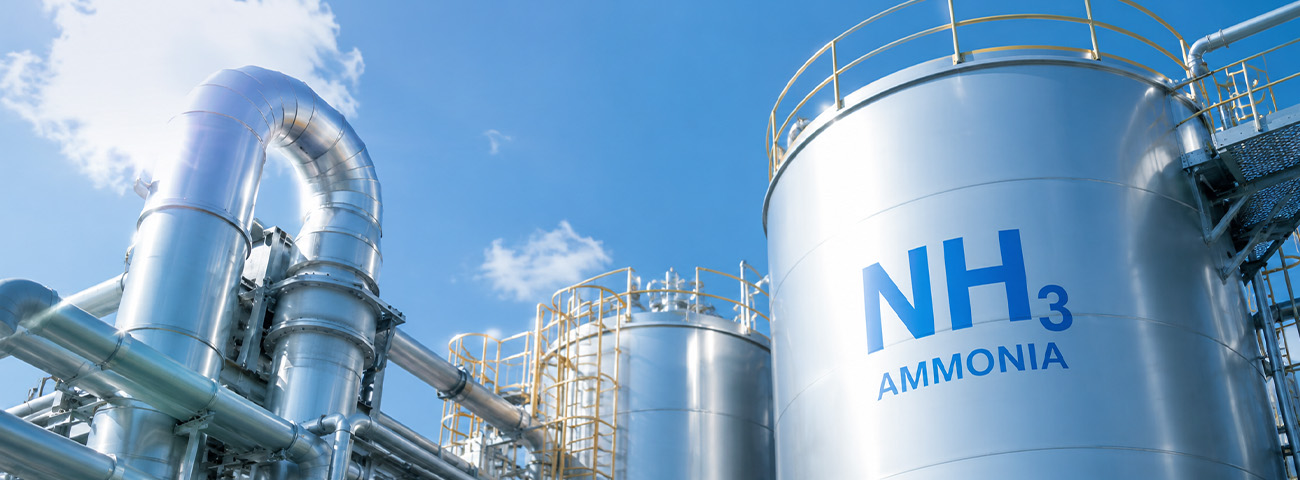
Ammonia (NH₃) is a representative energy carrier capable of storing and transporting hydrogen. Ammonia cracking is a technology that decomposes stored ammonia into hydrogen (H₂) and nitrogen (N₂) at the point of demand, producing hydrogen usable in fuel cells and industrial processes.
Seowoin is developing an ammonia-based hydrogen production system grounded in ammonia cracking reactor and catalyst technology. This technology can be extended beyond ships to land-based power generation, industrial hydrogen supply, and mobile power applications.
Technical Overview
The ammonia cracking process decomposes ammonia into hydrogen and nitrogen under high-temperature catalytic reaction conditions.
-
01

NH₃
-
02

H₂
-
03

N₂
Key factors in this process include reaction temperature, pressure, catalyst performance, thermal management, and startup time. Seowoin is developing a rapid-heating ammonia cracking reactor aimed at fast startup and stable hydrogen production.
Key Development Directions
Ru-Based Catalyst
The performance of the ammonia cracking reaction is highly dependent on the catalyst. Seowoin applies Ru-based ammonia cracking catalysts to develop reaction conditions for stable hydrogen production.
500°C Cracking Operation
The ammonia cracking reaction proceeds at high-temperature conditions. Seowoin aims to achieve high conversion rates under cracking operation conditions at approximately 500°C.
Thermal Management Technology
Thermal management technology is being developed in parallel to analyze and recover heat generated from the ammonia cracking reactor, fuel cell, and exhaust gas, thereby improving system efficiency.
Performance Table
| Parameter | Performance |
|---|---|
| Ammonia Cracking Temperature | 500℃ |
| Ammonia Cracking Pressure | 6bar |
| Ammonia Cracking Conversion Rate | ≥ 98% |



About us
Seowooin Co., Ltd. ㅣ CEO : CHOUNG HWAN JANG ㅣ Business Registration Number : 417-88-01656
Head Office / Factory : 108, Haeryongsandan 6-ro, Haeryong-myeon, Suncheon-si, Jeollanam-do 58023, Republic of Korea (Seowooin Co., Ltd.)
COPYRIGHT © 2024 SEOWOOIN CO.,LTD ALL RIGHTS RESERVED
CS CNETER
TEL : 070-7731-5452
FAX : 061-989-8603
E-mail : swi@seowooin.com